Lead Paint Removal in Grand Prairie

Grand Prairie Lead Paint Removal plans lead paint removal in Grand Prairie for houses whose old paint has started to fail on the outside: lap siding shedding flakes, fascia and eaves gone bare, window sills worn to raw wood, brick that someone painted decades ago. Before anyone scrapes, we find out whether the paint contains lead and which surfaces carry it, then set out removal, stabilizing or covering for each part of the house.

Texas splits the oversight. The Department of State Health Services (DSHS) certifies the people and firms who inspect for lead, assess hazards and abate lead paint in homes built before 1978, while the EPA itself enforces its Renovation, Repair and Painting (RRP) rule for repainting and repair work here. In Grand Prairie, the 2020-2024 American Community Survey dates roughly 31% of about 71,900 homes before 1980, and about one in ten before 1960.

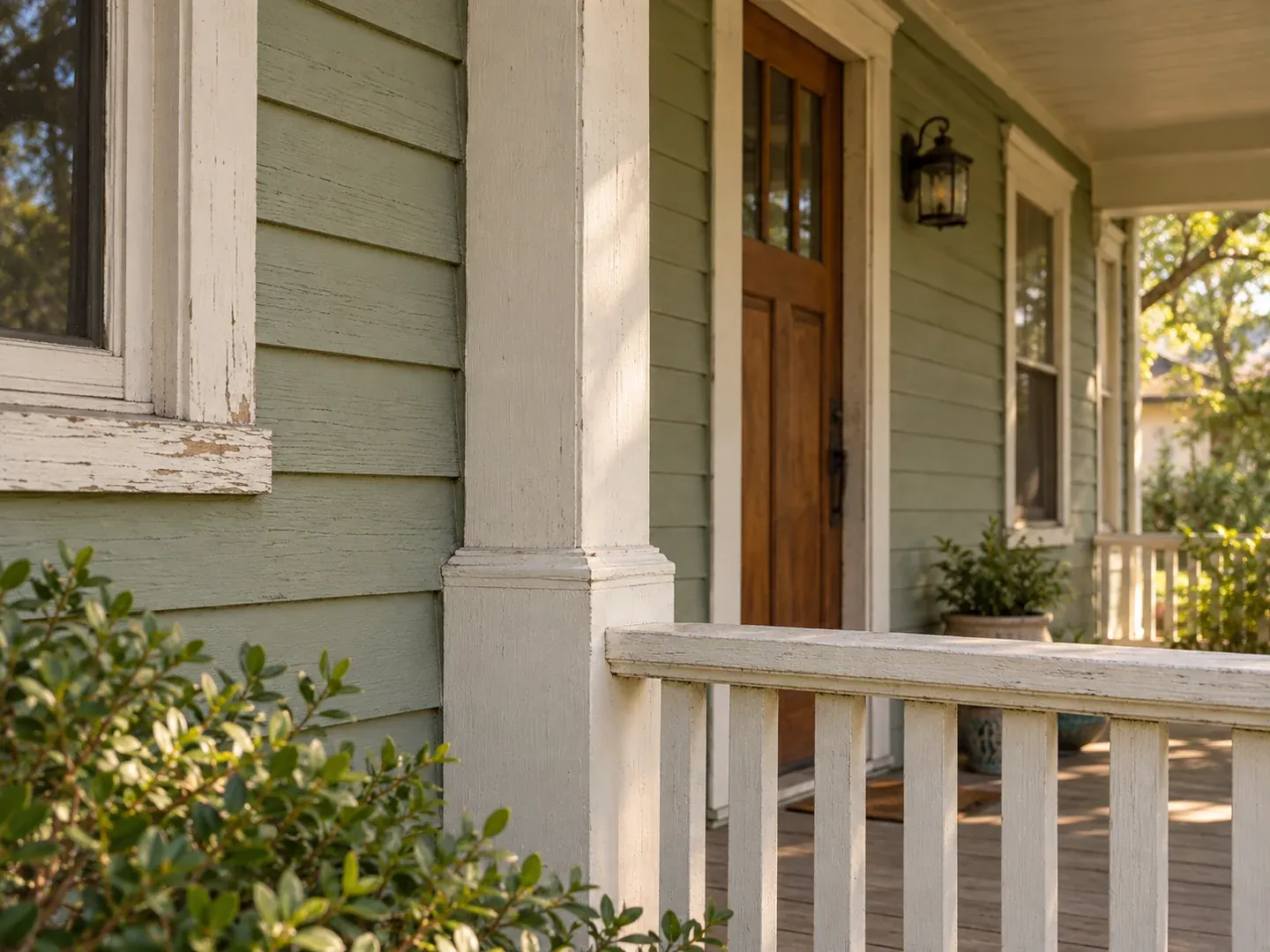
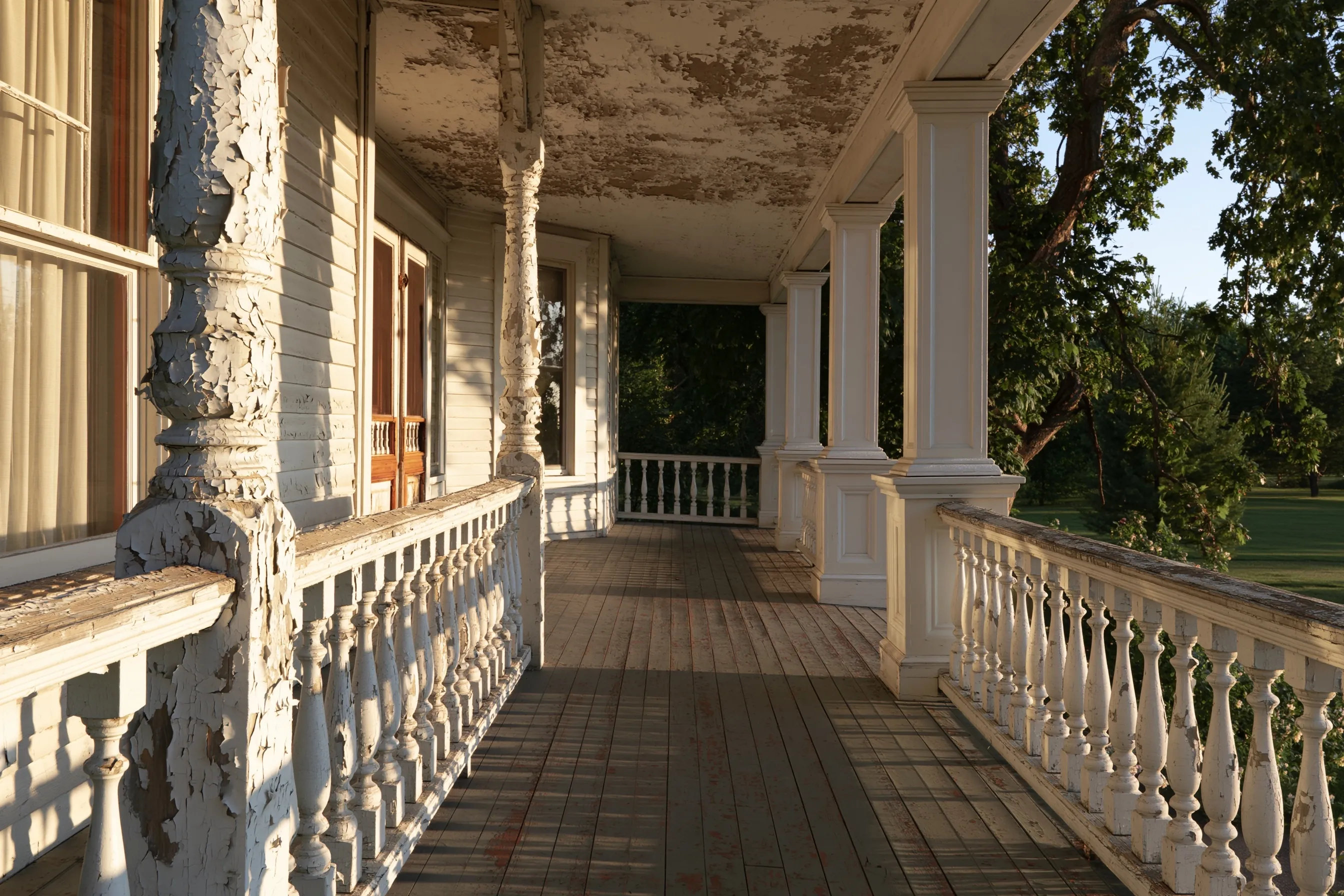
Older porch with peeling painted railings and columns
Peeling exterior lead paintLead paint on window sills and framesLead paint on brick and masonryLead paint inspectionEncapsulation and enclosure

Lead paint services

Painted wood siding, porch post and railing beside a wood entry doorOriginal painted wood double-hung windows with chipped paint in a brick wall

Peeling exterior lead paint

Paint peeling off wood siding, soffits, fascia and porch posts drops chips straight into the soil along the foundation. Depending on how much is loose and what the inspection finds, the fix may be wet scraping and repainting under the EPA rule, full stripping by a DSHS-certified abatement firm, or replacing the worst boards. In every case the ground is covered before the work starts.

Lead paint on window sills and frames

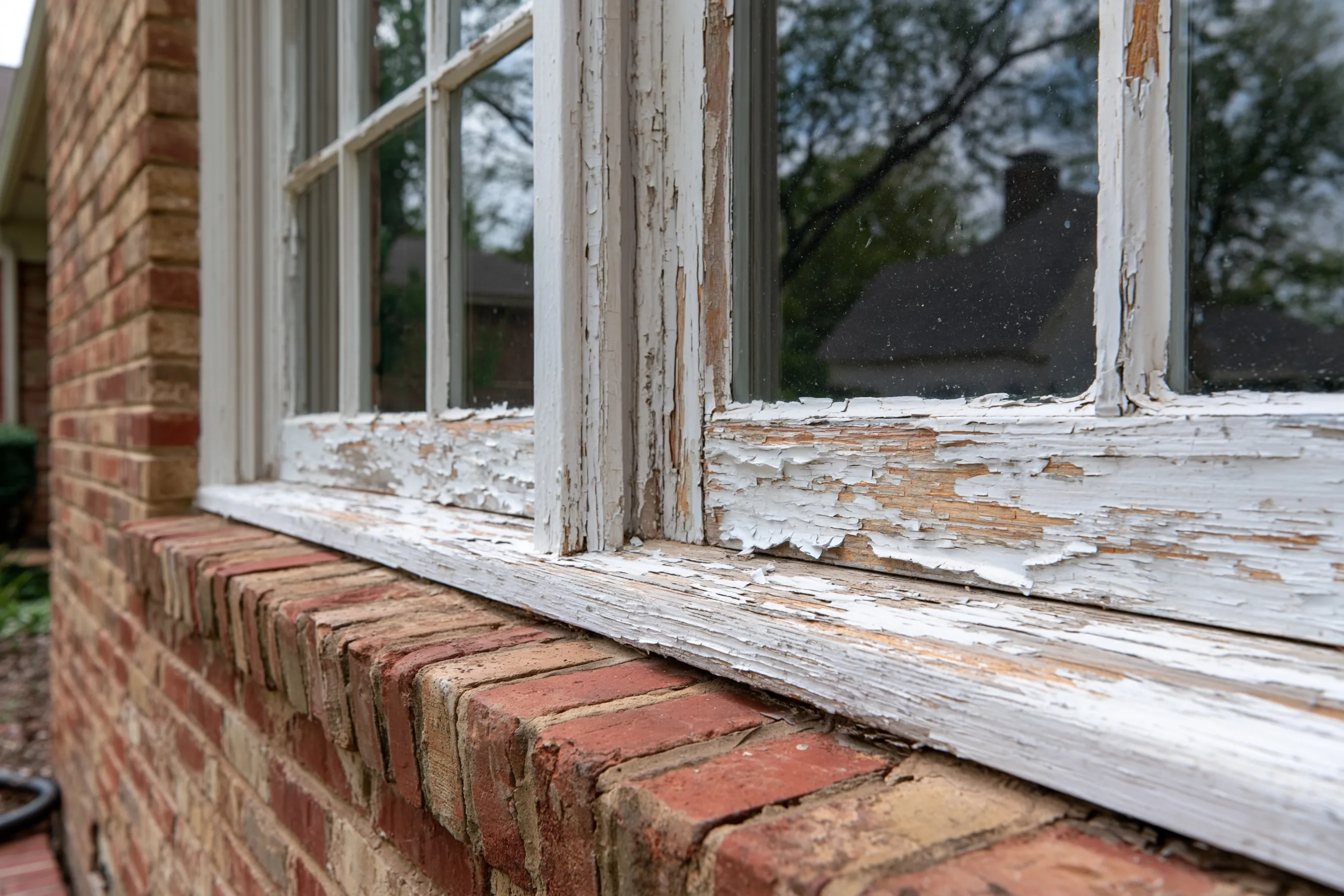
Sills and frames take wear that walls do not. Wood sashes slide against their stops and jambs, and sills sit under sun and rain, so old paint there grinds into dust or lifts away early. We weigh stripping, sash repair and full replacement; in a pre-1978 house, replacing a window is always covered by the EPA renovation rule, however small the job.

Painted red-brick wall with peeling, chalking paint beside weathered wood window trimFloor plan, sample containers and a tape measure on a desk beside a painted window

Lead paint on brick and masonry

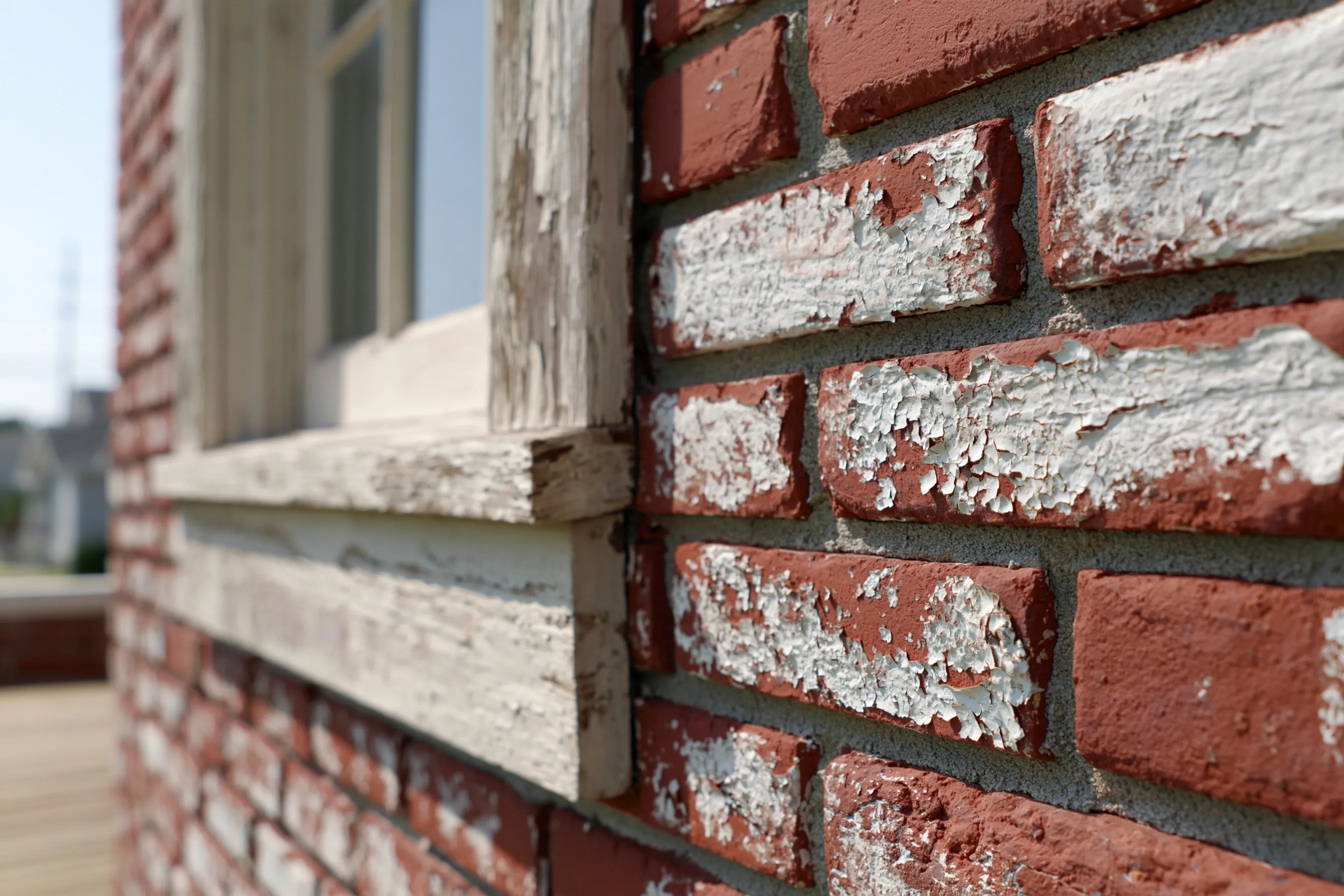
Brick and concrete block on an older house may have been painted more than once, and the bottom coats can be the ones with lead. Testing every layer comes first. Masonry strippers used under containment, or a sound recoat where the paint is still holding, keep lead dust out of the yard in a way dry blasting cannot.

Lead paint inspection

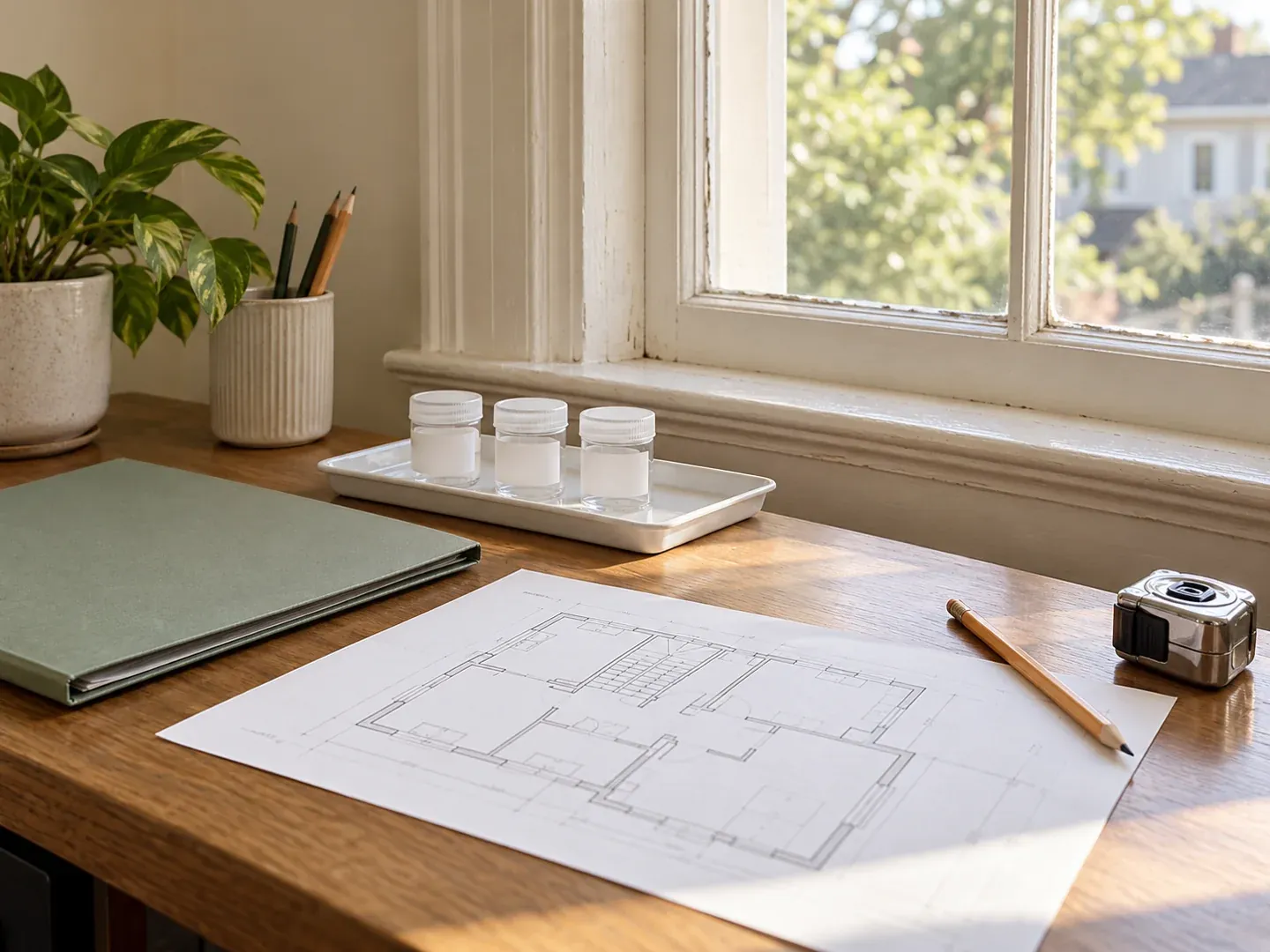
A lead-based paint inspection tells you which painted parts of the house test positive and which do not. In Texas a DSHS-certified inspector does it, using a handheld X-ray fluorescence (XRF) analyzer and sending paint chips to a lab when a reading is unclear. For a Grand Prairie house from the 1950s or 1960s, that report is the basis for every other decision on this page.

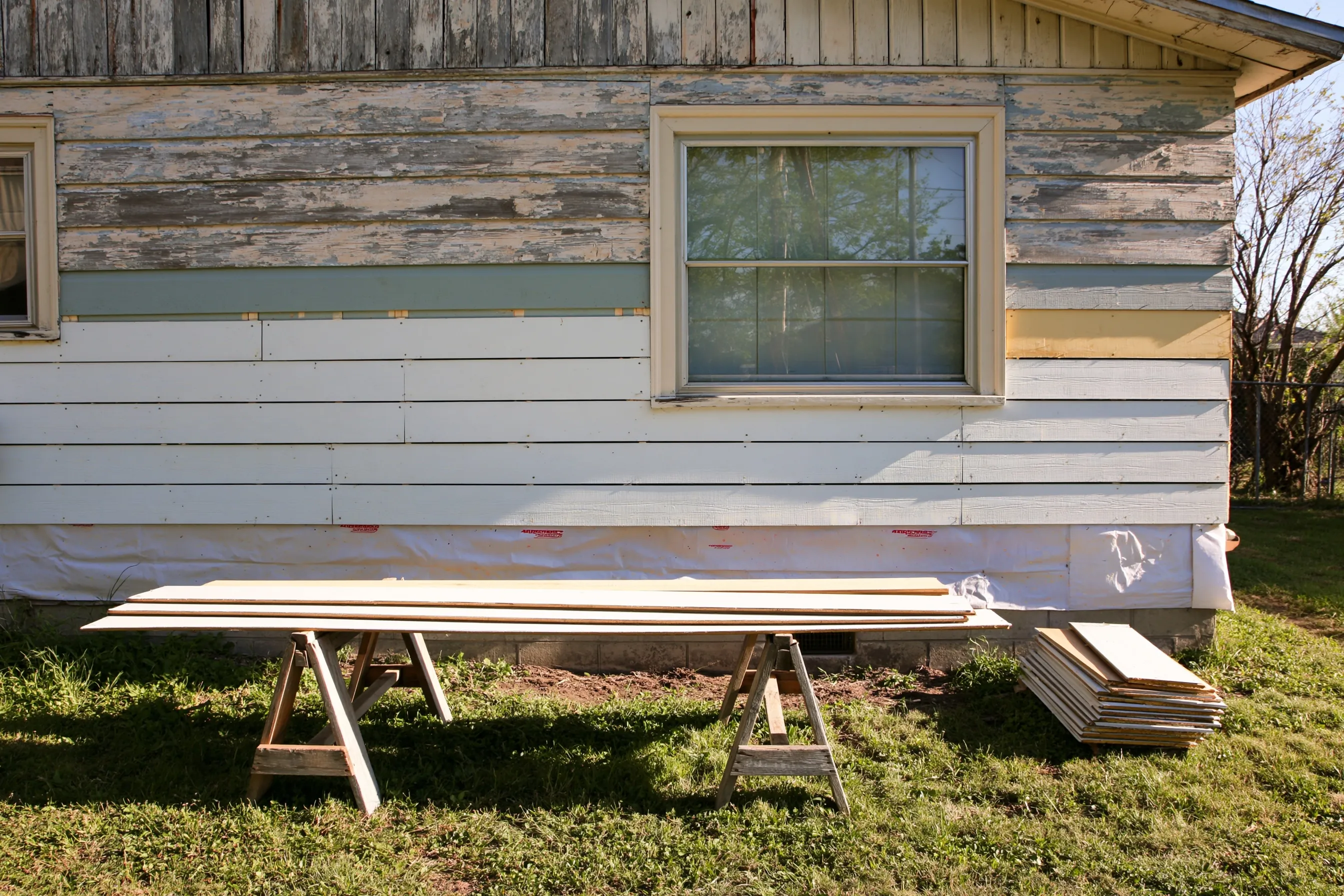
New primed lap boards going on across the lower wall of an old painted wood house

Encapsulation and enclosure

Lead paint that is still tightly bonded does not always have to come off. An encapsulant coating can seal it where it is, and enclosure covers it with new siding, metal trim wrap or panels. Both suit sound, flat surfaces rather than sills that rub or paint already lifting, and both leave the lead in place for later owners to know about.

Lead paint costs

Each line is hired labor plus materials and lab fees for a typical job in Grand Prairie, Duncanville or DeSoto, one line per job size. A small job on sound wood or brick sits near the low end. The open top end is for many coats of paint, rotten boards found under it, two-story walls or a failed clearance test that means cleaning again.

Peeling exterior lead paint

  • Porch and railings, about 150 sq ft$1,300 – $3,300+
  • One-story house, peeling trim, eaves and siding$4,500 – $12,000+
  • Two-story house$9,000 – $25,000+
What is included

Plastic on the ground, loose paint misted and scraped or stripped from siding, eaves, fascia, porch and trim, the worst boards replaced, primer and paint, and a check of the soil line for chips. Rotten framing and scaffolding on tall walls cost extra.

Get a free quoteSee an example projectAbout this service

Lead paint on window sills and frames

  • Strip and repair one window's sill and frame$500 – $1,500+
  • One window replaced$350 – $1,100+
  • About 10 windows$3,500 – $11,000+
What is included

Sills and frames stripped and repaired in place, or the whole window replaced, with plastic inside and out and a dust check of the sills at the end. Custom window sizes cost more.

Get a free quoteSee an example projectAbout this service

Lead paint on brick and masonry

  • One wall section, about 100 sq ft$750 – $1,700+
  • One side of a house, about 400 sq ft$2,900 – $6,800+
  • Whole painted brick house, about 1,500 sq ft of wall$11,000 – $25,500+
What is included

Every layer tested, plastic on the ground well past the wall, a paste stripper that lifts the paint, the rinse water caught, and the waste sealed in bags. Repointing soft mortar and painting the wood trim are extra.

Get a free quoteSee an example projectAbout this service

Lead paint inspection

  • Test of the parts a repair or repaint will touch$225 – $500+
  • Whole house up to 2,500 sq ft$300 – $700+
  • Large house over 2,500 sq ft$450 – $900+
  • Risk assessment with dust and soil samples, one house$500 – $1,500+
  • Clearance test after lead work$175 – $500+
What is included

Readings or paint chips from each type of painted surface, inside and out, and a written report of what tests positive and what does not. A risk assessment adds dust and soil samples. Rush reports cost more.

Get a free quoteSee an example projectAbout this service

Encapsulation and enclosure

  • Trim, eaves and a porch sealed, about 300 sq ft$1,100 – $3,000+
  • Painted walls sealed, about 1,000 sq ft$3,600 – $10,000+
  • New siding over old painted siding, one-story house, about 1,500 sq ft$11,000 – $24,000+
What is included

Loose paint misted and scraped first, then a coating made to seal lead paint brushed over sound paint, or new siding fixed over the old boards. The lead paint stays under it, so you get a record of what was covered.

Get a free quoteSee an example projectAbout this service

Ranges are 2026 estimates, not quotes. Your written estimate is free and comes after we have seen the home.

Our process

01

Check the year built

Federal lead rules draw their line at 1978, when residential lead-based paint was banned. Look up the original construction year, not the date of the last remodel; a 1990s addition does not change the age of the rooms it was attached to. A house finished in 1978 or later is outside the EPA renovation rule and the federal disclosure rule.

02

Inspect before scraping

For an older house, test before anyone scrapes, sands or pressure-washes. A DSHS-certified inspector or risk assessor identifies which surfaces carry lead-based paint. For a smaller repair, an EPA-certified renovator can also test just the parts the job will touch, with an EPA-recognized kit or paint chips.

03

Pick removal, stabilizing or covering

With results in hand, each surface gets its own answer. Abatement takes lead paint off or permanently seals it under DSHS rules, and the certified firm notifies the state at least seven working days ahead. Stabilizing means scraping loose paint and repainting under the EPA rule. Covering means an encapsulant coating or new siding over paint that is still sound.

04

Clean up and confirm

Outside, the last step is rolling up the ground sheeting and walking the soil line, sills and porch for stray chips. Renovation work closes with cleaning verification by the certified renovator, which for exterior work is a visual inspection. Abatement closes with a clearance examination before anyone moves back in. Keep the paperwork from either one.

Grand Prairie houses from the growth years

Grand Prairie’s postwar growth shows plainly in the census. The city counted 30,386 residents in 1960, 50,904 in 1970 and 71,462 in 1980, adding about 41,000 people in twenty years. Houses built in those two decades are now roughly 45 to 65 years old, and the smaller groups from the 1940s and 1950s are older still.

The 2020-2024 American Community Survey puts numbers on that stock. Of about 71,850 homes, the survey counts 9,785 built in the 1970s, 5,274 in the 1960s, 5,175 in the 1950s and 1,606 in the 1940s, with 447 older still: about 22,300 built before 1980. The city also has a large newer side, with about 39% of homes built in 2000 or later. The 1970s count includes houses finished in 1978 and 1979, so confirm the actual year before assuming the lead rules apply.

Peeling paint and city code

Grand Prairie Code Compliance lists extensive peeling paint as faulty weather protection under Sec. 29-18(7) of the city code, alongside exposed or rotted wood, broken windows, rusted exteriors and loose shingles. The section applies to the main house and to detached accessory buildings such as garages and sheds. The city’s page gives no deadline, so read the notice itself for the date and the officer to contact.

On a house built before 1978, the quick answer to a peeling-paint notice, scraping and repainting, is also the step that can spread lead around the yard. Unless the paint has been documented as lead-free, a paid painter disturbing more than 20 square feet outside works under the EPA rule: ground sheeting, misting, no torching and a cleanup check. Where whole walls of siding are failing, abatement or board replacement can settle the notice and the lead at the same time.

Grand Prairie and nearby cities

Grand Prairie Lead Paint Removal works in Grand Prairie, Texas, on both the Dallas County and Tarrant County sides of the city and in its Ellis County edge, and takes inquiries from neighboring cities, with pages for Duncanville and DeSoto. Duncanville’s housing is older than Grand Prairie’s, with about 58% of homes built before 1980, while DeSoto’s older homes are concentrated in the 1960s and 1970s. For another nearby address, include it with your request and we will tell you whether we can help.

Frequently asked questions

Does all paint before 1978 have lead?

No. The 1978 date means paint applied before then may contain lead, not that it does. EPA material puts the share of pre-1978 U.S. homes that still have some lead-based paint at about three in four, but it varies from house to house and surface to surface, and newer coats can hide older lead layers underneath. Testing is the only way to know for a particular wall, sill or door.

Is lead paint still toxic if painted over?

Painting over lead paint does not remove it; the lead stays in the layers underneath. While the top coats hold, it is sealed in. It becomes a hazard again when the paint peels, when a window sash rubs through it, or when someone sands or scrapes it. Ordinary paint over failing paint does not hold for long. Purpose-made encapsulant coatings over sound paint are the planned version of the same idea.

Can I scrape peeling lead paint myself?

The EPA renovation rule covers people who are paid to disturb paint, so it does not apply to owners working on the house they live in. It does cover rental owners and property managers, and anyone you hire. The hazard is the same either way: chips and dust from dry scraping land in the soil and get tracked indoors. We do not publish do-it-yourself removal steps; we can arrange testing and quote the work.

Who licenses lead abatement firms in Texas?

The Texas Department of State Health Services (DSHS). Under the Texas Environmental Lead Reduction Rules, its Environmental Lead Program certifies abatement contractors and their crews, plus lead inspectors and risk assessors, for work in pre-1978 homes, daycare centers and kindergartens. You can look up a company or a person in the DSHS licensee search. Renovation contractors are a different case: in Texas the EPA certifies painters, remodelers and window installers under its own rule.

Request a free lead paint removal quote

Start with the street address and an approximate build year. Then list the peeling surfaces (siding, eaves, sills, porch or brick), and say whether a child under six lives or stays there, whether tenants occupy it, and whether you already have a lead report or a notice from the city. We'll get back to you soon with an estimate or any questions we have. Estimates are free and there's no obligation.

Call (972) 944-8416

Call (972) 944-8416